Friday, May 1, 2020

Teenage Targets

In the midst of a Pandemic, we run into the issue of false information being spread, especially through social media. Fear sparks this bad information to run rampant on social media, where people of all age are consuming it. Although news articles are constantly posting data and need-to-know information about the virus, fact, and data, we still get to a point where we don't know what to believe. The World Health Organization (WHO) is taking advantage of social media to debunk misinformation on social media, and their targets? Teenagers.
https://www.theguardian.com/world/2020/mar/12/coronavirus-outbreak-tik-tok-memes
This makes sense, since teenagers are the ones consuming social media the most. WHO has taken to two popular social media platforms - TikTok and Snapchat- to stop the spread of the misinformation. They have decided to target these two apps because the age range of users on this app tend to be much younger than other social media platforms. It is important to teach the younger generation on how to best protect themselves, and with all of their free time being devoted mostly to social media, what better place to advertise the truth about this virus?
I think taking to TikTok and SnapChat is brilliant. If Coronavirus, COVID-19, or pandemic are mentions in the video or the caption of a TikTok, a link is automatically tacked on to the bottom of the video, which will take you to information about COVID-19, provided by the World Health Organization. Since teenagers are spending so much time on social media, I don't see a better or more proactive way of getting them the truth about how to stay healthy during a pandemic. Not only does WHO provide the link, they also have their own page, dedicated to "Myth busting" the false information being spread around on social media. Taking such large platforms that are primarily young people is a great example of using social media the right way.
https://news.yahoo.com/targets-teens-social-media-debunk-virus-myths-135451291.html

Thursday, April 30, 2020

Social Media and COVID-19

The Coronavirus Pandemic is not the first time people have taken to social media to express their ideas and opinions, they do it every day. But with COVID-19 becoming so upfront in the lives of everyone around the world, it is safe to say it is "trending", to say the least. News articles about new findings, updated statistics, business closures, and stay-at-home orders flood news feeds on social media, as well as the (for the most part) uneducated opinions of our fellow social media users.
When I log on to social media, Facebook especially, Coronavirus related news stories and lengthy status updates are all I see on my timeline. My favorite part about going on Facebook right now is going to a Fox8 News article, and reading the comments, that seem to go on forever, about whether things should re-open or not, why people are deciding to not wear masks or gloves when they go out, people deciding not to stay home, etc.. While some people attempt to do research on these things before they post a 600-word comment, many of them do not. They consider themselves and the hardships they are personally facing, and do not consider the other things that go into the decisions being made by our government or health officials on why stay-at-home orders are in place, why we should wear masks, and why businesses, restaurants, and stores are still closed. Ignorance is bliss.

https://bestforseniors.online/cell-phones-for-seniors/
Of course I am ready for things to go back to normal, for us students to return to school, to go back to work, to be able to go out and eat in a restaurant, and for the utter fear and panic among us to be over. But I refrain from posting anything about the virus and the way we are handling it on any form of social media. Why? Because I am not educated and informed enough about the situation to put my opinions out there. There are so many aspects about health and safety, employment, the economy, and many more I am sure I know nothing about, that play a part in the decisions being made. There are arguments about the government stripping citizens of their rights in order to flatten the curve and stop the spread of the virus. There could possibly be a valid argument there.
I have also seen an outpour of support on social media. Community members offering to make grocery store trips for elderly neighbors, picking up medications for them at the drugstore, and offering to help those who are unable to, or are at a very high risk for contracting this virus very severely. Whether social media is a good or bad thing is solely up to those who use it and how they decide to do so. Offering to help others is a good way to use it, while putting out an ignorant, uneducated opinion, is probably not.
https://time.com/5802802/social-media-coronavirus/

COVID-19 and Media Consumption

https://bestforseniors.online/cell-phones-for-seniors/
The Coronavirus Pandemic that has struck the world has put us out of work, out of school, and in our homes, with a lot of free time on our hands. What do we do with all of this time? Many have decided to devote this time to media, and not just teenagers. People of all ages have taken advantage of the many sources of entertainment our media industry has to offer, video games, social media, streaming, music, online shopping, videos, podcasts, the list goes on. With more time spent at home and boredom striking most, media provides a source of entertainment and an outlet for all of this newfound free time.
I have found myself spending my free time catching up on television shows I did not previously have time to watch, spending a lot more money online than I probably should, discovering new music, and spending a lot of time on social media. Before the outbreak, I did watch stream a television show here and there and scroll through social media when I had a few extra minutes, but I did not have time to get lot doing these things for hours on end. I definitely have spent more time doing this since COVID-19 had its sudden impact.
http://www.takepart.com/article/2015/07/12/loud-music/
I don't find it shocking for Gen Z to be spending so much time doing these things, especially since we spent too much time doing it before the outbreak, but I do find it shocking how many of the older generational people spend time on these platforms. I also find it rather ironic, considering their non stop comments about how much time we waste on our phones, playing video games, etc..
I am not oblivious to the drawbacks of spending so much time consuming media, especially during times like these. A lot of false information and panic is being spread about the virus, where not many, myself included, know what exactly to believe about this virus. But at the same time, all of this time being spent online can be used for good. We can offer support to those who need it, and a break from being stuck inside all day. While it is no surprise to me the increase in media consumption, I am glad to see that the older generations get to figure out the things they can do with all of this technology they have time to play with and figure out for entertainment during pressing times such as these. Especially in the sense of social media, I think those outlets can serve a very positive and important purpose during a very difficult time when the only places we can go are within the walls of our home, or where we can be taken by consuming media though photos, music, movies, or whatever suits your fancy.
https://www.visualcapitalist.com/media-consumption-covid-19/

Net Neutrality

Network Neutrality is a principle that must be followed by and and all internet service providers. The idea is that all communications on the internet must be treated equally, free from discrimination based on the user(s), content, platform, etc.. Providers are prohibited from slowing down, blocking, or charging for specific content. Net Neutrality is important because it prevents favoritism of certain content over others and preventing prioritization. Net Neutrality gives the power of prioritization to the consumer, not the Internet Providers.
Net Neutrality seems like a no-brainer. But like everything else, there are pros and there are cons. The pros seem rather obvious. Net neutrality provides us with freedom of expression, internet service providers cannot limit what content is available, everyone gets to put their content on the internet and promotes diversity in that way. Not only does it promote diversity, it promotes innovation and competition. Ideas and content are driving consumers, not who paid the most for their content to be shown above the competition. With net neutrality, we get access to everything, not just what providers want us to see, and there is equal opportunity for different websites, applications, businesses, etc.. Cons require a deeper thinking. On the surface, net neutrality seems like a fair way to police the internet. Net neutrality allows for abuse of many things, such as free speech. With freedom of speech, nothing can really be done about cyberbullying that occurs over the internet, which is an increasing problem. Net neutrality also limits innovation. Without charging for certain access, companies cannot use money that could have come from paid access to greater innovate their products and or services.
Like many other things, I don't think there is one simple and easy solution to the net neutrality debate. There are good things to it, and bad, but the good far outweighs the bad. Net neutrality allows for free speech, no discrimination when it comes to web access, and the promotion of diversity and innovation, to name a few. I think there is always room for improvement, but net neutrality should definitely have a place on the internet.
https://en.wikipedia.org/wiki/Net_neutrality
https://www.mageplaza.com/blog/pros-and-cons-net-neutrality.html#6-crons-of-net-neutrality

How Private is Our Privacy?

When we sit in our homes, use our cell phones, meet up with friends, go to church, etc., we don't entertain the idea of being watched. Recently, people have begun covering the cameras on the front of their laptops, computers, and cell phones, some of them joking that "the government is watching". Is it a joke, though? Not only the government, but others are watching us, constantly, random strangers on the internet, banks, potential and current employers, schools, and a multitude of other people and entities are keeping eyes on us. Our personal information is not so personal when it is constantly accessed by others. While sometimes this information is necessary for identification or other legitimate reasons, it is way too accessible.
Personally, I always though that I have done nothing wrong, I have not committed crime, I do not post bad things, why would the government, or anyone for that matter, have any interest in watching me, or looking at my information. Reality is, whether you have done something or not, your information is everywhere. Police departments have amazing technological capabilities that can track you based on your license plate and your cell phone, companies can use advancements for advertisements, the list goes on. We joke about our privacy when we think about purchasing something, and then the advertisements for that item pop up everywhere. Why is that? When we type something into our phone, when we get in our car and we go somewhere, someone out there knows about it, or has the capabilities to find out. Whether you are online posting about your life, or sitting in your home or car minding your own business, your information is accessible to someone. My original idea about my information now seems extremely naive.
In the age of technology, with facial recognition and fingerprint scanners on our cell phones, everything we post online being archived somewhere, our credit being accessible to employers, banks, and others, no information that we own about ourselves is exclusively ours, someone else always has it. It is a scary thought to know that someone out there, whether it is the government, a corporation or business, or just everyday people,  can access even our most personal information. In all honesty, it makes me want to just close my computer, delete all of my social media, and be done with it all, but it seems that even with a limited online presence, our information still is unsafe. Some might argue that if you have done nothing wrong, why does it matter that your information is accessible to others aside from yourself, or those you have explicitly gave access to. Your information is your information and you have a right to your privacy.
 https://www.ted.com/talks/juan_enriquez_your_online_life_permanent_as_a_tattoo/up-next
https://www.ted.com/talks/catherine_crump_the_small_and_surprisingly_dangerous_detail_the_police_track_about_you/up-next
https://www.ted.com/talks/christopher_soghoian_how_to_avoid_surveillance_with_the_phone_in_your_pocket/up-next
https://www.ted.com/talks/darieth_chisolm_how_revenge_porn_turns_lives_upside_down/up-next

Online Presence and the Use of Social Media

I, and probably most people, have always heard to be careful what you put online. I have always been told be be conscientious of what I type, what I post, pictures I upload, my word choices, my personal information, the list goes on. Even though I am careful, I still have quite an online presence. Social Media is where the majority of my presence is online. I have many different social media accounts, including Facebook, Twitter, Snapchat, Instagram, and LinkedIn. Facebook has the most of my personal information, my birthdate, where I am from, where I live, where I went to high school, where I go to school now, not to mention information about my family. And not only that, but there is information and photos of me on family member's accounts as well.
As far as what I post, my content typically consists of things I find appropriately funny, there are no curse words on any of my social media pages, pictures of me with my friends and family, and maybe a few news articles I have shared here and there. I try my best to filter out any content that would shine a bad light on me for professional reasons, an idea that was put in my head as soon as I started in on social media by my parents and teachers, which I am very grateful for. My email address, my home address, phone number, and other personal information is not public on any of my social media, just because I know how easily that information could get into the wrong hands, which I would rather not risk.
As far as the impact social media has on mental health, I completely agree that it could have negative impacts. The anonymity that can be provided by hiding behind a screen under a false name or using false pictures or information can be very harmful. Cyberbullying is a very really problem, one that I have encountered myself, and it being online just makes it that much worse. In my own opinion, social media should be a place to keep up with friends and family, not a place where you have to be worried about slander, blackmail, and all the other issues that have arisen from to use of social media in cyberbullying. We become so involved and dependent on these applications that it consumes everything we do, I am guilty of that. If I leave my house without my phone, I have tp turn around an go get it. I could not go all day without being able to check SnapChat or Instagram, it has become too big of a part of my lifestyle. When we get so lost in social media, depression is definitely a possible outcome. We see pictures of other people, we can become jealous of their looks, their lifestyle, but in reality, everyone paints a much happier picture of their life online. Between this and cyberbullying social media can become a mental health crisis for many people.
It is safe to say that many of us are way too attached to our social media. That being said, I don't think social media is a bad thing, it just depends on the user. By not putting out personal information, being careful of what you post, and not pitying yourself over how other people's lives look on social media, I think it can be used for great things. I see Facebook being used to share campaigns for raising money for medical bills, for fundraisers. In my hometown, due to the pandemic, we had a favorite creamery everyone loves to go to. They were in danger of shutting down due to the lack of business the pandemic closures have caused. With a few shares on social media, they sold out of everything in the creamery. Social media can bring people together, or rip them apart, it is up to how we use it.
https://www.facebook.com/homelandcreamery/photos/a.10151885070833344/10157051184233344/?type=3&theater

3D Printing, A New Kind of Innovation

3D printing is a process that creates a three-dimensional product from a model designed on a computer. It is also called additive manufacturing, because material is added to the object layer by layer. People create and print many types of things using 3D printing; toys, art, and recently, face shields. Although it seems like a new concept, the first 3D printer came about in Japan in 1986. The most commonly used method of 3D printing is called Fused Deposition Modeling, which was invented in 1989. So, if these 3D printers were invented thirty years ago, why do they seem like such new technological innovations? Rogers' Diffusion of Innovations Theory has reasoning behind that.
The Diffusion of Innovations Theory, developed by Everett Rogers in 1962, explains the reasoning behind new ideas and technological spread, such as how, why, and the rate they spread. According to the theory, there are four main things that influence the spread, the innovation, communication channels, time, and a social system. Looking at these four elements, we could possibly explain the timeline of the 3D printer and its increasing popularity. In the 80's, 3D printing was just being developed and not very common. It was a good idea, but who had the need for a 3D printer, or needed to print things in 3D, not only that, but who could afford a luxury such as that? The first 3D printer used a technology called stereolithography. A machine with such capabilities could cost $100,000 or more. As for communication, in 1989, we did not have the cell phones we have today, where we could search things in a matter of seconds, order things online, research it, or even hear about it. Many people might not have heard about it in the first place, since there are not the platforms that there are today. Even if it was affordable, communication about this technology just wasn't available. Time plays a big part in innovation theory, especially in the case of 3D printing. Just in the last thirty years, there has been quite a few different types of 3D printing, including, but not limited to: Stereolithography, Digital Light Processing, Fused Deposition Modeling, Selective Laser Sintering, Selective Laser Melting, etc. These different forms were not thought of over night, They required time for the innovators to develop and trial-and-error all of these different methods. Even now, there is more than one method that is used. Not only is the time of development at play, the time for these ideas to be adopted takes time. An invention or innovation is not created on Day 1, and being sold out in stores on Day 2. It takes a lot of time for the idea to be adopted and adapted. Lastly, there is the social system aspect. This could tie in to communication and time. The things we have available to us, such as Google, Amazon, and other sites and engines we use to search for products and ideas, were not accessible to us before. But now that we have the ability to see what these printers can do, how they can benefit us, that they are affordable, or even that we can just hear about them, is due to social systems.
I think 3D printing is a great and overlooked innovation. I asked some people myself how new they though the invention was, and they all told me sometime within the last 10 years. Especially with the pandemic that has come about in the last several weeks and months, I think we have seen how beneficial 3D printing can be. Yes, it can print toys, and silly little things that can hold up your phone while you watch videos, I have seen many things about 3D printing face shields for healthcare workers due to the increase in demand and the very low supply. Innovations may take time, but they sure can be beneficial, whether it is 10 months after they are introduced, or 10 years.
https://en.wikipedia.org/wiki/Diffusion_of_innovations#Elements
https://3dinsider.com/3d-printer-types/
https://en.wikipedia.org/wiki/3D_printing
https://www.pcmag.com/news/3d-printing-what-you-need-to-know

Friday, April 10, 2020

Freedom of Speech Threatened by Political Correctness


Many people know that it is a good thing to be considerate of other people, their religion, their race, and other things about them. But as everyone knows, the world is not perfect, and neither are the people who live in it. Not everyone you meet is going to be considerate of, or even care at all, about you and how you feel about certain topics. Americans are blessed to live in a place where we have the freedoms to speak out against the government, to voice our opinions, to debate, etc. But a pressing issue that has been growing in recent years is the oppression of this freedom, which is guaranteed to us by the Bill of Rights. 
There are arguments that hate (non-threatening) speech, racist speech, and other hateful speech should not be protected by the First Amendment, that the people who say these mean and evil things should not be guaranteed protection to say them. Although people should not say these things, they do. And it is their Constitutional right. Punishing these people would violate the Constitution and the country as a whole would suffer from it for many reasons. Sheltering people from this type of speech is not good for growth. People cannot grow and overcome hardships if they are not exposed to imperfect, or politically incorrect, speech. The world is not always fair, and the things people say won't be either. Cushioning people's perspectives on the world and the people around them in respects to their feelings and opinions is not worth sacrificing one of the most important freedoms in the U.S. Constitution. It may not seem this way, but even when people say hurtful things, or voice their opposing opinions on sensitive topics, we are better from it. 

By telling one person that their speech is limited, you are telling the rest of the country that their speech can be limited, in the case that someone or a group of people does not like or agree with what you say. Learning to tolerate diverse speech and opinions and building a tolerant society, can lead to strengthening our country. Not only can tolerating diversity be applied to speech, it can be helpful to the individual in the workplace, at school, in everyday life. It only makes America weaker in limiting the speech of our citizens, one of the reasons this country was born. Not everyone is kind and considerate, but social norms can take care of that. Limiting the rights of Americans is not the answer.

Sunday, March 8, 2020

Encouraging Illegal Immigration (A Crime?)

In 1986, a federal law was passed that made it illegal to encourage immigrants who came into the United States illegally, or who were trying to, to come or stay in the country without proper authorization and documentation. While there are still some in support of this, some have raised a question about if this law violates the First Amendment's freedom of speech. Some Justices, such as Chief Justice John G. Roberts, feel that it is not lawful to consider those who encourage illegal immigrants criminally complicit, "...a grandmother whose granddaughter is in the United States illegally, would it be a crime if she told her granddaughter, 'I hope you will stay because, you know, I will miss you; things will not get better if you go back, so I encourage you to stay'". While on the other hand, some think the First Amendment is not relevant in this case. Attorney Eric J Feigin argues that the statute is not intended to be directed at speech.
The criminal justice system is full of gray areas, where right and wrong are not always black and white. There are always ethical, moral, emotional, and situational factors that play a part in tying to determine what the right thing to do it. This is a great example of that. Is it a criminal act for people to encourage their family members to stay in a country that is safer, full of better opportunity, better living conditions, etc., just because they were not born here? The use of the word "encourage" in the statute is up for debate. Does encouraging account for the words they use to try and get illegal immigrants to come to our country or to continue to stay here? Does it apply to the resources they might make available to them to stay, such as a place to stay, schooling, etc.? I definitely see where an argument could be made that this statute is in violation of the First Amendment, but I do not think that is how many people would interpret it, or how it was intended to be.
https://www.nytimes.com/2020/02/25/us/politics/supreme-court-immigration-first-amendment.html
https://www.npr.org/2017/03/29/521920595/canadians-report-more-scrutiny-and-rejection-at-u-s-border-checkpoints

Facebook (Privacy) Settings

Most everyone we know has a Facebook page. We use Facebook to connect with old friends, family, the latest cat videos, the list goes on. When you create an account, Facebook asks for information like your name, date of birth, phone number, etc. When we create these accounts, we are entrusting the company with this private information. But what if this information were to become not so private?
In September of 2019, Elliott Murray, the CEO of a cybersecurity company found a public online database containing phone numbers of Facebook users, that could be traced back to the person using their known phone number. It has since been fixed, but this is a large issue when it comes to. online privacy and security. It is not safe to have your personal information on a database online that is accessible by the public.
My friends, family, and I all have accounts with Facebook. It frightens me to think that someone had the capability of going online and finding their personal information. The article did not update that the database was no longer available online until five days after it was found. In the Facebook Data Use policy, it explains how your data that you enter is used. In this instance, your phone number and email can be used by others who have that information, to search for your account. As a Facebook user, you have the ability to turn this setting off on your account, where people cannot search your phone number or email and find your account. When the database was discovered, that took the discretion away from the Facebook user, whether that feature was enabled on your account or not, people could find you if they knew little bit of your information. This could have lead to the breaching or hacking of accounts, which could have lead to even worse issues. It's a good thing Facebook took care of this issue, but is that the only database out there? Is our information we share online to these social media providers really safe?
https://www.digitaltrends.com/social-media/terms-conditions-facebooks-data-use-policy-explained/
https://www.cnet.com/news/facebook-user-phone-numbers-still-online/


Tuesday, March 3, 2020

Apple's First iPod

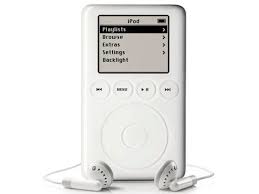
Apple is a large company that offers phones, laptops, earphones, watches, smart pens, and mp3 players. Apple first released an mp3 player, called an iPod, in October of 2001. The iPod was available in white only, and in 5GB and 10GB of storage. Depending on which capacity, it could hold 1,000-2,000 songs, and was priced from $399-$499. The battery on the iPod lasted for 10 hours. In the first 2 months, Apple sold 25,000 iPods.
Apple was not the first to put out an mp3 player. Despite other companies already launching mp3 players, Apple's iPod was looked at as the best one on the market. The iPod was the start of Apple's sleek design that they are known for with all of their products. The iPod also led to the creation of iTunes. Prior to iTunes, listeners had to burn songs onto the iPod from CD's. iTunes allowed for listeners to download their music straight from the app and put it onto the iPod. 
Fast forward to 2020, 19 years after the launch of Apple's first iPod. The most recent iPod that has been released is the 7th Generation iPod Touch. It was released in May of 2019 and is available in the colors Pink, Red, Gray, Silver, Gold, Blue, and Red. They are also sold in three different storage capacities, 32GB, 128GB, and 256GB. The price of the iPod ranges from $199-$399. It can hold 8,000-33,000 songs, and has a battery life up to 40 hours. In direct comparison to the first iPod, just a few of the changes we can see superficially are the cameras both on the front and back of the device, the touchscreen display, all of the different apps that can be used on the mp3 player, and countless more advancements. 
When we think of all of the changes and advancements that have been made in the technology industry, we think of how we went to cassette tapes and records, to CD players, and VHS tapes to DVDs and then to streaming. W tend to overlook the enormous changes that occur, even within just a single company, and even just a singular product. In 19 years, we can see the immense changes and differences between Apple's first iPod and their most recent one. iPods are not as popular now due to Apple's iPhone's capability to do everything that the iPod can do, as well as everything a phone can do. Apple is a great representation of the technological advances that we have seen in just the past 19 years, and a foreshadowing of the great things that have yet to come in the technological world.


https://www.cnet.com/pictures/the-complete-history-of-apples-ipod/
https://www.lifewire.com/history-ipod-classic-original-2000732
https://www.apple.com/ipod-touch/specs/

The Beginning of Google

Google is a widely-used search engine that has really blossomed into a corporation that offers email, phone systems, maps, and many more. Google also owns other companies such as YouTube and Android. Started at Stanford University by two graduate students, it was first called BackRub. 70 Percent of people around the world use Google in some way. Google is useful for people of all ages, professions, and for many different reasons. It can be used by students for research, by kids for games and music, it can be used to find companies for hire, restaurants, GPS maps, pictures, and almost anything you can think of.
I myself use Google on a daily basis. Anytime I look up anything on the internet I immediately type in Google.com first. I like the way Google displays their search results, the things they recommend by my search, and it is comfortable to use. I like Google because it is compatible. It makes it easy to do group projects using Google Slides and Google Docs. Being able to collaborate on a project with people when you are not physically together is one of my favorite things that Google provides. I did not realize that Google owned the companies that it does. I was aware that Android used a Google system in their phones, but I did not know that Google owned Android. I was also unaware that Google owned YouTube, which is also a very commonly used website/app. I use YouTube to watch music videos, watch lecture videos, and sometime I get lost on the app and just watch videos for hours.
Google is an extremely large corporation that we use every day, whether we realize it or not. I think we have benefitted a lot from Google and the services they provide. Gmail, Google maps, Google slides/docs, Google Earth, YouTube, are all things that I know many people use every single day.

(Source: Class Presentation)
http://www.rubelmahmud.com/useful-google-products-services-you-probably-dont-introduce-yet/

Sunday, February 16, 2020

Anti Anti-War?

The United States is the world's strongest superpower. From the beginning of our nation's history, America has been involved in numerous wars, some we started, some we were brought into, and some we entered, which some might argue, that we had no business getting involved in. Many times in the news, we see stories about what our military advances are and what recent things have gone on where we have troops stationed. In recent years, the main place has been the Middle East. We have been at war for as long as I have been alive in the Middle East and it seems to be unending. And while many support our troops at home and overseas, many don't support our country being at war. They don't support the administration that sends our citizens to war to potentially be injured or die for a war we don't support. And while we see things in the news about our actual being at war, do we ever see opposition to war? In January of 2020, President Donald Trump ordered the assassination of Iran's top general, Qassem Soleimani. Although I saw on social media where some people were unhappy about this move and some were in full support of it, I did not see much on the news about being against this. Why is this? Why do we only see support for war in the news?
The memo written about the assassination of the Iranian general included President Trump's justification for the killing. The memo does not speak of any imminent threat that Soleimani or Iran posed to the United States. Instead, the memo cites many past instances that led Trump to his decision. The only things that I witnessed being in the news was the critiquing of Trump, not the actual act of war he committed. Trump has faced a lot of criticism ever since he was elected in 2016, and even before, so this was not a surprise. But why was the focus on the president and not the act of war, and the opportunity that it opened up for the United States to start another war?
Is the news just deciding that publishing anti-war opinions is not news-worthy? Will they face too much backlash from an article that promotes anti-war views, or even includes them? Why are they so few and far between? Why do people who do not support war have such a small voice in the media? Until I saw the AntiWar.com website, I had never seen so many articles that did not support war. Not that there were so many, but that I never see anything but social media about being against war. The most recent historic time I recall hearing about people being against war was the protests of the Vietnam War, and even hearing about that so many years later, it is looked down upon for people to have had that opinion about the war. Is it a patriotic, nationalistic thing, or is it a suppression of opposition issue? Are we infringing on the rights of those who have alternate opinions, not giving them the same freedom of speech as those who support war?
https://www.antiwar.com
https://news.antiwar.com/2020/02/14/white-house-justifies-killing-soleimani-for-past-actions-not-imminent-threats/
https://en.wikipedia.org/wiki/Anti-war_movement#/media/File:War2.png

Is Google Violating Antitrust Laws?


When questions come to mind, we want to quickly find the answers. "How old is Kanye West?" "How long do you boil an egg?" "How do I tie a tie?" When we ask others these questions on a day-to-day basis, what is the usual response if they don't know? "I don't know, just Google it." The first website many people go to for research, for questions, shopping, and ideas is Google. In fact, Google is used for nine out of ten online searches. But, has this become too much? 
Many states, 48 of them to be exact, think so. The Attorney Generals of all states, including Washington D.C. and Puerto Rico, aside from California and Alabama, have begun an investigation of Google and if they have violated antitrust laws in becoming such a large corporation. Not only has Google become the main search engine, but their products and services have also begun to take over the market. Many of these investigations have focused on advertising. Google is being investigated on their paid advertising. Many of the first results shown are ads from companies and providers that have paid a lot of money to be one of the first shown when searched. The biggest concern in these investigations is if Google broke the law in the process of becoming such a powerhouse. It is a chain reaction for spending. Advertising for a higher search result means the advertisers pay more, which in turn leads to consumers paying more in the end. State Attorney Generals are not the only ones who think this is an issue. The Department of Justice and the Federal Trade Commission have begun to conduct investigations of Google and Facebook. One possible outcome they are looking for would be to split Google search into a separate entity, away from the bulk of the company. 
It is not something I have ever thought about, but this is a serious issue. I think many people are the same way. They don't think twice about it. You need to know something or want to buy something, you type it into the Google search engine, and you're done. It is easy, it is convenient, and it is comfortable. But when you really think about it, I rarely ever click to the next page of search results. Meaning, I only see the results from advertisers are paying an extensive amount of money to show me their product of service I searched. If I buy from them, I am paying for the product or service, and helping them pay off however much they paid for their advertisement on Google's first page of results. I think that splitting Google's search engine to a separate company would be a good idea. It would lessen the monopolistic hold that Google has on the internet. The question is though, did Google break any laws in doing this, and is Google a true monopoly? And even if these accusations are true, can they just pay their way out of it?

https://www.cbsnews.com/news/google-antitrust-probe-48-u-s-states-launch-antitrust-investigation-of-google-dominance-in-search-ads-and-data/

Monday, February 3, 2020

First Amendment Violated While Demonstrating for the Second

A peaceful demonstration for Second Amendment gun rights was quickly shut down at Montclair State University in New Jersey by officials at the school. An organization on campus, The Young Americans for Liberty, were demonstrating their opinions on gun rights peacefully on campus when university police told them to shut it down.
According to university policy, anyone who wishes to speak on campus must request permission from the Dean two weeks in advance and they will be given a specific time and place to do so. According to the lawsuit filed against the school, this was a violation of the students' First Amendment right to the Freedom of Speech, as there are no guidelines to the two-week policy to speak on campus. The Alliance Defending Freedom is representing the students in the lawsuit.
College is when you start to branch out as an individual. You start to form your own opinions based on your own experiences instead of just what your parents have told you growing up. Shutting down a peaceful demonstration on a college campus is in violation of two rights of the First Amendment. Not only freedom of speech but also freedom to assemble. They did so peacefully and I could see where this lawsuit could be successful in favor of the students trying to voice their opinions on a very controversial and currently hot topic in our country.
https://www.njspotlight.com/2020/01/lawsuit-claims-montclair-state-university-policies-limit-free-speech/
https://www.nj.com/essex/2020/01/nj-university-violated-1st-amendment-by-shutting-down-gun-rights-demonstration-lawsuit-alleges.html

Teenage Targets

In the midst of a Pandemic, we run into the issue of false information being spread, especially through social media. Fear sparks this bad i...