Sunday, March 8, 2020

Encouraging Illegal Immigration (A Crime?)

In 1986, a federal law was passed that made it illegal to encourage immigrants who came into the United States illegally, or who were trying to, to come or stay in the country without proper authorization and documentation. While there are still some in support of this, some have raised a question about if this law violates the First Amendment's freedom of speech. Some Justices, such as Chief Justice John G. Roberts, feel that it is not lawful to consider those who encourage illegal immigrants criminally complicit, "...a grandmother whose granddaughter is in the United States illegally, would it be a crime if she told her granddaughter, 'I hope you will stay because, you know, I will miss you; things will not get better if you go back, so I encourage you to stay'". While on the other hand, some think the First Amendment is not relevant in this case. Attorney Eric J Feigin argues that the statute is not intended to be directed at speech.
The criminal justice system is full of gray areas, where right and wrong are not always black and white. There are always ethical, moral, emotional, and situational factors that play a part in tying to determine what the right thing to do it. This is a great example of that. Is it a criminal act for people to encourage their family members to stay in a country that is safer, full of better opportunity, better living conditions, etc., just because they were not born here? The use of the word "encourage" in the statute is up for debate. Does encouraging account for the words they use to try and get illegal immigrants to come to our country or to continue to stay here? Does it apply to the resources they might make available to them to stay, such as a place to stay, schooling, etc.? I definitely see where an argument could be made that this statute is in violation of the First Amendment, but I do not think that is how many people would interpret it, or how it was intended to be.
https://www.nytimes.com/2020/02/25/us/politics/supreme-court-immigration-first-amendment.html
https://www.npr.org/2017/03/29/521920595/canadians-report-more-scrutiny-and-rejection-at-u-s-border-checkpoints

Facebook (Privacy) Settings

Most everyone we know has a Facebook page. We use Facebook to connect with old friends, family, the latest cat videos, the list goes on. When you create an account, Facebook asks for information like your name, date of birth, phone number, etc. When we create these accounts, we are entrusting the company with this private information. But what if this information were to become not so private?
In September of 2019, Elliott Murray, the CEO of a cybersecurity company found a public online database containing phone numbers of Facebook users, that could be traced back to the person using their known phone number. It has since been fixed, but this is a large issue when it comes to. online privacy and security. It is not safe to have your personal information on a database online that is accessible by the public.
My friends, family, and I all have accounts with Facebook. It frightens me to think that someone had the capability of going online and finding their personal information. The article did not update that the database was no longer available online until five days after it was found. In the Facebook Data Use policy, it explains how your data that you enter is used. In this instance, your phone number and email can be used by others who have that information, to search for your account. As a Facebook user, you have the ability to turn this setting off on your account, where people cannot search your phone number or email and find your account. When the database was discovered, that took the discretion away from the Facebook user, whether that feature was enabled on your account or not, people could find you if they knew little bit of your information. This could have lead to the breaching or hacking of accounts, which could have lead to even worse issues. It's a good thing Facebook took care of this issue, but is that the only database out there? Is our information we share online to these social media providers really safe?
https://www.digitaltrends.com/social-media/terms-conditions-facebooks-data-use-policy-explained/
https://www.cnet.com/news/facebook-user-phone-numbers-still-online/


Tuesday, March 3, 2020

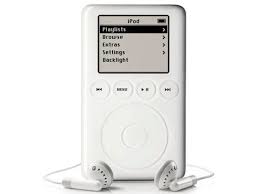
Apple's First iPod

Apple is a large company that offers phones, laptops, earphones, watches, smart pens, and mp3 players. Apple first released an mp3 player, called an iPod, in October of 2001. The iPod was available in white only, and in 5GB and 10GB of storage. Depending on which capacity, it could hold 1,000-2,000 songs, and was priced from $399-$499. The battery on the iPod lasted for 10 hours. In the first 2 months, Apple sold 25,000 iPods.
Apple was not the first to put out an mp3 player. Despite other companies already launching mp3 players, Apple's iPod was looked at as the best one on the market. The iPod was the start of Apple's sleek design that they are known for with all of their products. The iPod also led to the creation of iTunes. Prior to iTunes, listeners had to burn songs onto the iPod from CD's. iTunes allowed for listeners to download their music straight from the app and put it onto the iPod. 
Fast forward to 2020, 19 years after the launch of Apple's first iPod. The most recent iPod that has been released is the 7th Generation iPod Touch. It was released in May of 2019 and is available in the colors Pink, Red, Gray, Silver, Gold, Blue, and Red. They are also sold in three different storage capacities, 32GB, 128GB, and 256GB. The price of the iPod ranges from $199-$399. It can hold 8,000-33,000 songs, and has a battery life up to 40 hours. In direct comparison to the first iPod, just a few of the changes we can see superficially are the cameras both on the front and back of the device, the touchscreen display, all of the different apps that can be used on the mp3 player, and countless more advancements. 
When we think of all of the changes and advancements that have been made in the technology industry, we think of how we went to cassette tapes and records, to CD players, and VHS tapes to DVDs and then to streaming. W tend to overlook the enormous changes that occur, even within just a single company, and even just a singular product. In 19 years, we can see the immense changes and differences between Apple's first iPod and their most recent one. iPods are not as popular now due to Apple's iPhone's capability to do everything that the iPod can do, as well as everything a phone can do. Apple is a great representation of the technological advances that we have seen in just the past 19 years, and a foreshadowing of the great things that have yet to come in the technological world.


https://www.cnet.com/pictures/the-complete-history-of-apples-ipod/
https://www.lifewire.com/history-ipod-classic-original-2000732
https://www.apple.com/ipod-touch/specs/

The Beginning of Google

Google is a widely-used search engine that has really blossomed into a corporation that offers email, phone systems, maps, and many more. Google also owns other companies such as YouTube and Android. Started at Stanford University by two graduate students, it was first called BackRub. 70 Percent of people around the world use Google in some way. Google is useful for people of all ages, professions, and for many different reasons. It can be used by students for research, by kids for games and music, it can be used to find companies for hire, restaurants, GPS maps, pictures, and almost anything you can think of.
I myself use Google on a daily basis. Anytime I look up anything on the internet I immediately type in Google.com first. I like the way Google displays their search results, the things they recommend by my search, and it is comfortable to use. I like Google because it is compatible. It makes it easy to do group projects using Google Slides and Google Docs. Being able to collaborate on a project with people when you are not physically together is one of my favorite things that Google provides. I did not realize that Google owned the companies that it does. I was aware that Android used a Google system in their phones, but I did not know that Google owned Android. I was also unaware that Google owned YouTube, which is also a very commonly used website/app. I use YouTube to watch music videos, watch lecture videos, and sometime I get lost on the app and just watch videos for hours.
Google is an extremely large corporation that we use every day, whether we realize it or not. I think we have benefitted a lot from Google and the services they provide. Gmail, Google maps, Google slides/docs, Google Earth, YouTube, are all things that I know many people use every single day.

(Source: Class Presentation)
http://www.rubelmahmud.com/useful-google-products-services-you-probably-dont-introduce-yet/

Sunday, February 16, 2020

Anti Anti-War?

The United States is the world's strongest superpower. From the beginning of our nation's history, America has been involved in numerous wars, some we started, some we were brought into, and some we entered, which some might argue, that we had no business getting involved in. Many times in the news, we see stories about what our military advances are and what recent things have gone on where we have troops stationed. In recent years, the main place has been the Middle East. We have been at war for as long as I have been alive in the Middle East and it seems to be unending. And while many support our troops at home and overseas, many don't support our country being at war. They don't support the administration that sends our citizens to war to potentially be injured or die for a war we don't support. And while we see things in the news about our actual being at war, do we ever see opposition to war? In January of 2020, President Donald Trump ordered the assassination of Iran's top general, Qassem Soleimani. Although I saw on social media where some people were unhappy about this move and some were in full support of it, I did not see much on the news about being against this. Why is this? Why do we only see support for war in the news?
The memo written about the assassination of the Iranian general included President Trump's justification for the killing. The memo does not speak of any imminent threat that Soleimani or Iran posed to the United States. Instead, the memo cites many past instances that led Trump to his decision. The only things that I witnessed being in the news was the critiquing of Trump, not the actual act of war he committed. Trump has faced a lot of criticism ever since he was elected in 2016, and even before, so this was not a surprise. But why was the focus on the president and not the act of war, and the opportunity that it opened up for the United States to start another war?
Is the news just deciding that publishing anti-war opinions is not news-worthy? Will they face too much backlash from an article that promotes anti-war views, or even includes them? Why are they so few and far between? Why do people who do not support war have such a small voice in the media? Until I saw the AntiWar.com website, I had never seen so many articles that did not support war. Not that there were so many, but that I never see anything but social media about being against war. The most recent historic time I recall hearing about people being against war was the protests of the Vietnam War, and even hearing about that so many years later, it is looked down upon for people to have had that opinion about the war. Is it a patriotic, nationalistic thing, or is it a suppression of opposition issue? Are we infringing on the rights of those who have alternate opinions, not giving them the same freedom of speech as those who support war?
https://www.antiwar.com
https://news.antiwar.com/2020/02/14/white-house-justifies-killing-soleimani-for-past-actions-not-imminent-threats/
https://en.wikipedia.org/wiki/Anti-war_movement#/media/File:War2.png

Is Google Violating Antitrust Laws?


When questions come to mind, we want to quickly find the answers. "How old is Kanye West?" "How long do you boil an egg?" "How do I tie a tie?" When we ask others these questions on a day-to-day basis, what is the usual response if they don't know? "I don't know, just Google it." The first website many people go to for research, for questions, shopping, and ideas is Google. In fact, Google is used for nine out of ten online searches. But, has this become too much? 
Many states, 48 of them to be exact, think so. The Attorney Generals of all states, including Washington D.C. and Puerto Rico, aside from California and Alabama, have begun an investigation of Google and if they have violated antitrust laws in becoming such a large corporation. Not only has Google become the main search engine, but their products and services have also begun to take over the market. Many of these investigations have focused on advertising. Google is being investigated on their paid advertising. Many of the first results shown are ads from companies and providers that have paid a lot of money to be one of the first shown when searched. The biggest concern in these investigations is if Google broke the law in the process of becoming such a powerhouse. It is a chain reaction for spending. Advertising for a higher search result means the advertisers pay more, which in turn leads to consumers paying more in the end. State Attorney Generals are not the only ones who think this is an issue. The Department of Justice and the Federal Trade Commission have begun to conduct investigations of Google and Facebook. One possible outcome they are looking for would be to split Google search into a separate entity, away from the bulk of the company. 
It is not something I have ever thought about, but this is a serious issue. I think many people are the same way. They don't think twice about it. You need to know something or want to buy something, you type it into the Google search engine, and you're done. It is easy, it is convenient, and it is comfortable. But when you really think about it, I rarely ever click to the next page of search results. Meaning, I only see the results from advertisers are paying an extensive amount of money to show me their product of service I searched. If I buy from them, I am paying for the product or service, and helping them pay off however much they paid for their advertisement on Google's first page of results. I think that splitting Google's search engine to a separate company would be a good idea. It would lessen the monopolistic hold that Google has on the internet. The question is though, did Google break any laws in doing this, and is Google a true monopoly? And even if these accusations are true, can they just pay their way out of it?

https://www.cbsnews.com/news/google-antitrust-probe-48-u-s-states-launch-antitrust-investigation-of-google-dominance-in-search-ads-and-data/

Monday, February 3, 2020

First Amendment Violated While Demonstrating for the Second

A peaceful demonstration for Second Amendment gun rights was quickly shut down at Montclair State University in New Jersey by officials at the school. An organization on campus, The Young Americans for Liberty, were demonstrating their opinions on gun rights peacefully on campus when university police told them to shut it down.
According to university policy, anyone who wishes to speak on campus must request permission from the Dean two weeks in advance and they will be given a specific time and place to do so. According to the lawsuit filed against the school, this was a violation of the students' First Amendment right to the Freedom of Speech, as there are no guidelines to the two-week policy to speak on campus. The Alliance Defending Freedom is representing the students in the lawsuit.
College is when you start to branch out as an individual. You start to form your own opinions based on your own experiences instead of just what your parents have told you growing up. Shutting down a peaceful demonstration on a college campus is in violation of two rights of the First Amendment. Not only freedom of speech but also freedom to assemble. They did so peacefully and I could see where this lawsuit could be successful in favor of the students trying to voice their opinions on a very controversial and currently hot topic in our country.
https://www.njspotlight.com/2020/01/lawsuit-claims-montclair-state-university-policies-limit-free-speech/
https://www.nj.com/essex/2020/01/nj-university-violated-1st-amendment-by-shutting-down-gun-rights-demonstration-lawsuit-alleges.html

Teenage Targets

In the midst of a Pandemic, we run into the issue of false information being spread, especially through social media. Fear sparks this bad i...